The Grey Lady (Ann Dixie)
LegendSeen: The house and grounds
Said to be a daughter of the 4th baronet killed by a man-trap set for her lover. No record of the death and no named witnesses.
Hotel · You can stay here
The Park, Market Bosworth
Bosworth Hall at Market Bosworth, Leicestershire, is a Grade II* listed country house of about 1680-90, built for the Dixie baronets, used as a hospital in the 20th century and now a Britannia hotel with about 210 rooms. Its ghost, the Grey Lady, is said to be Ann Dixie, a daughter of the 4th baronet who died in a man-trap set for her lover, and her blood is said to seep through a floor. The story comes from the hotel's own history page and ghost sites, with no named witnesses. You can stay.
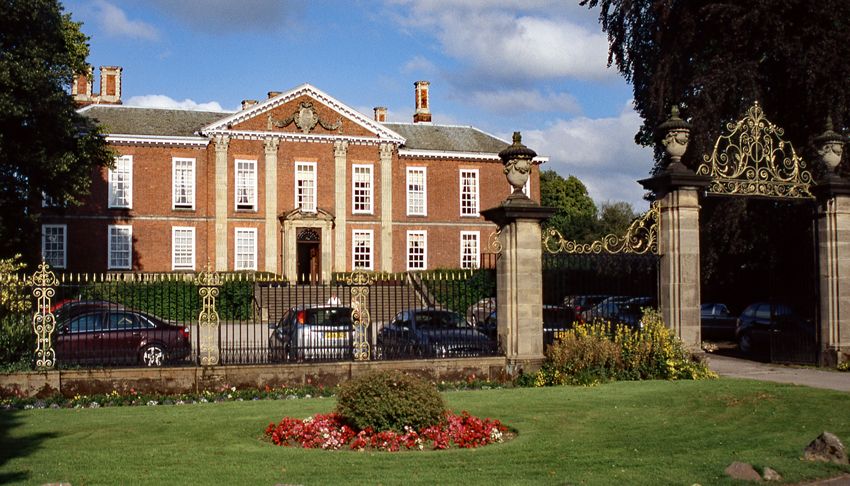
The house is well documented. Historic England lists it at Grade II* as largely of about 1680-90, with alterations of about 1837-50 and additions of 1885, and Wikipedia sets out its owners from the Dixies to Leicestershire County Council and Britannia Hotels. The hotel's own history page gets several dates wrong.
The ghost isn't documented. We found no record of Ann Dixie's death in a man-trap; a 2015 biography blog tells it as fact but cites nothing. No source names anyone who has seen the Grey Lady or the bloodstain. Some ghost sites also give the hotel the ghost of Lady Lisgar, but she belongs to a different house, Bosworth Hall at Husbands Bosworth, about 20 miles away.
What we checked:Documented history × 6Legend × 2Disputed × 2See each claim
Seen: The house and grounds
Said to be a daughter of the 4th baronet killed by a man-trap set for her lover. No record of the death and no named witnesses.
Seen: A wooden floor above a fireplace
Said to be Ann's blood, still seeping through the floor. The hotel doesn't say which room.
The hotel's history page says its ghost, the Grey Lady, is Anne Dixie, a daughter of the 4th baronet, Sir Wolstan Dixie. She fell in love with the gardener, and her father, who disapproved, set a man-trap to catch him. She fell in it herself and died of her injuries. Her ghost is said to roam the grounds looking for her lost lover. A biography blog of 2015 says she was born in 1739, went out to warn her sweetheart and died at nineteen, but gives no source.
The hotel says the stains from her wounds are still seen seeping through a wooden floor above the fireplace. It doesn't say which room.
Some ghost sites name the hotel's ghost as Lady Lisgar, who refused to let a dying servant have the last rites. That story, and a stain from a priest's spilt wine, belong to Bosworth Hall at Husbands Bosworth, where Lady Lisgar lived from 1881 until 1902. It's a separate house in the south of the county.
Sir Wolstan Dixie, Lord Mayor of London, bought the land in 1589. The house was built for his family's descendant Sir Beaumont Dixie, 2nd Baronet, who inherited in 1682; Historic England dates it to about 1680-90. The family had been made baronets at the Restoration in 1660.
In 1732 the 4th baronet, Sir Wolstan Dixie, a notorious bully, made the young Samuel Johnson usher at the town's grammar school and lodged him at the Hall. Johnson left after a few months and remembered the place with "a degree of horrour".
Sir Alexander Beaumont Churchill Dixie, 11th Baronet, married the writer, war correspondent and campaigner Lady Florence Douglas in 1875. She wrote Across Patagonia (1880) while living here, and a county council green plaque was put up for her in 2018. The family lost their fortune and the estate was sold in 1885. The last baronet died in 1975.
The new owner, Charles Tollemache Scott, had the architect Thomas Garner enlarge the house and build estate buildings, including the water tower. In the cellar are two doors from Newgate Prison cells, removed in 1903. His daughter sold the estate in 1913.
The county council bought it in 1931 and it became Bosworth Park Infirmary. The folk guitarist Davy Graham was born there in 1940. The listing of 1987 still calls it a hospital; the hotel's own page says it closed in 1957. A developer that bought it for a hotel went bankrupt, and Britannia Hotels finished the conversion. It has about 210 bedrooms, a spa and a pool.
1589
The Dixies buy Bosworth
1680
The Hall is built
March 1732
Samuel Johnson lodges here
1885
Sold to Tollemache Scott
1931
Becomes a hospital
What each story about Bosworth Hall Hotel & Spa rests on. A published account shows that someone reported an experience, not what caused it.
The house is Grade II* listed and largely of about 1680-90, with alterations of about 1837-50 and additions of 1885.
Samuel Johnson was lodged at the Hall as usher of the grammar school and left after a few months of harsh treatment.
The estate was sold to Charles Tollemache Scott, who had Thomas Garner enlarge the house.
The hotel's page also says the estate was resold in the late 18th century and that the last baronet died in 1875; Wikipedia gives a sale in the 1880s and the last baronet's death in 1975.
The Hall closed as a hospital in 1957.
The hotel's claim. The listing of May 1987 still describes it as a hospital, and Wikipedia says it remained one until 1988.
Britannia Hotels completed the conversion to a hotel after the first developer went bankrupt.
Ann Dixie, daughter of the 4th baronet, died after falling in a man-trap her father set for her lover, and her ghost, the Grey Lady, haunts the Hall.
No record of the death found. The biography blog gives no source, and no witness to the ghost is named.
Ann's blood still seeps through a wooden floor above a fireplace.
The hotel's own story; no room is named.
Bosworth Hall Hotel & Spa is said to be haunted by the Grey Lady (Ann Dixie) and the bloodstain. Reported activity includes apparition, atmospheric.
The hotel says it has a Grey Lady, Ann Dixie, who died in a man-trap set for her lover. There's no record of her death and no named witness to the ghost.
No. Lady Lisgar lived at a different Bosworth Hall, at Husbands Bosworth in the south of Leicestershire, and the story about her belongs there.
Historic England dates the house to about 1680-90, with changes in the 1840s and big additions in 1885.
Yes. It's a Britannia hotel with about 210 bedrooms, a spa and a pool.
No guest accounts yet. If you've stayed here, yours could be the first.
Share your experiencePage last reviewed 24 November 2026.
Check room prices and availability for your dates.
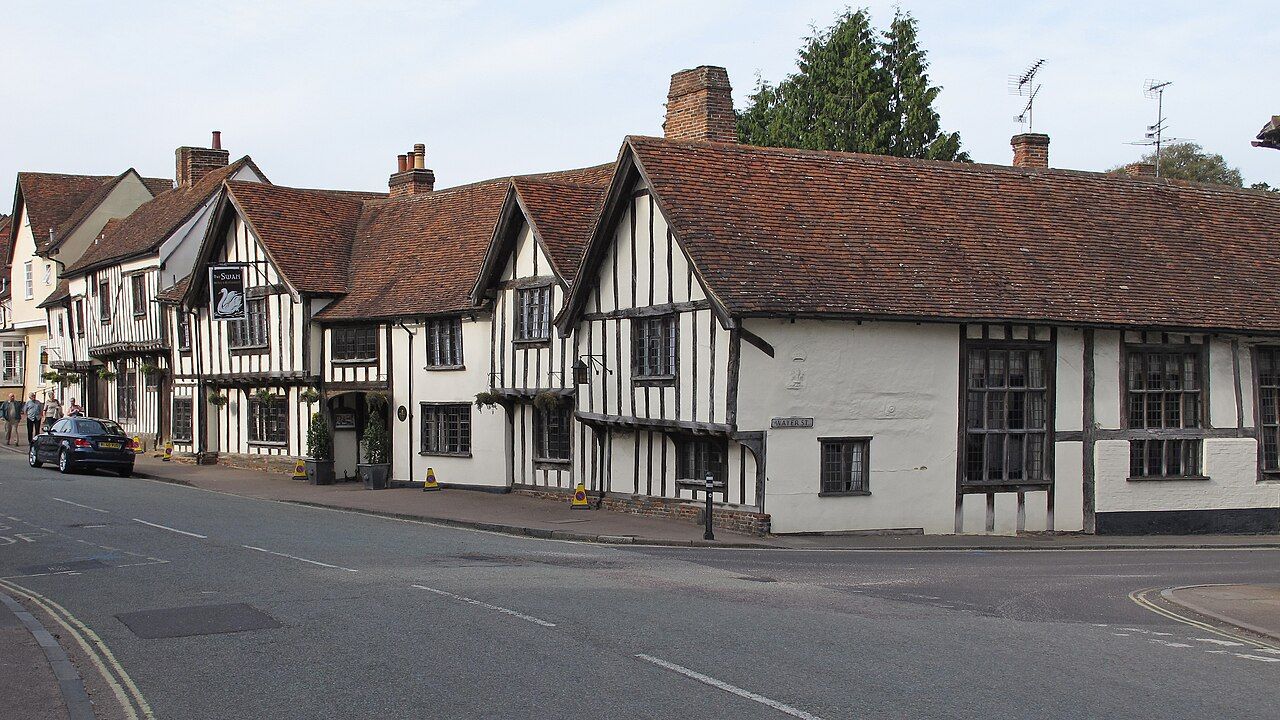
A cluster of medieval timber-framed houses in Lavenham, Suffolk, joined with a Grade I guild hall to make one hotel. American airmen signed the walls of its bar in the Second World War, and Room 15 has a ghost story.
Check prices
Guests experienced footsteps coming from within their room (not from adjacent rooms), wild temperature fluctuations despite the thermostat being turned off, and a laptop falling off a table in the middle of the night with no explanation.
Check prices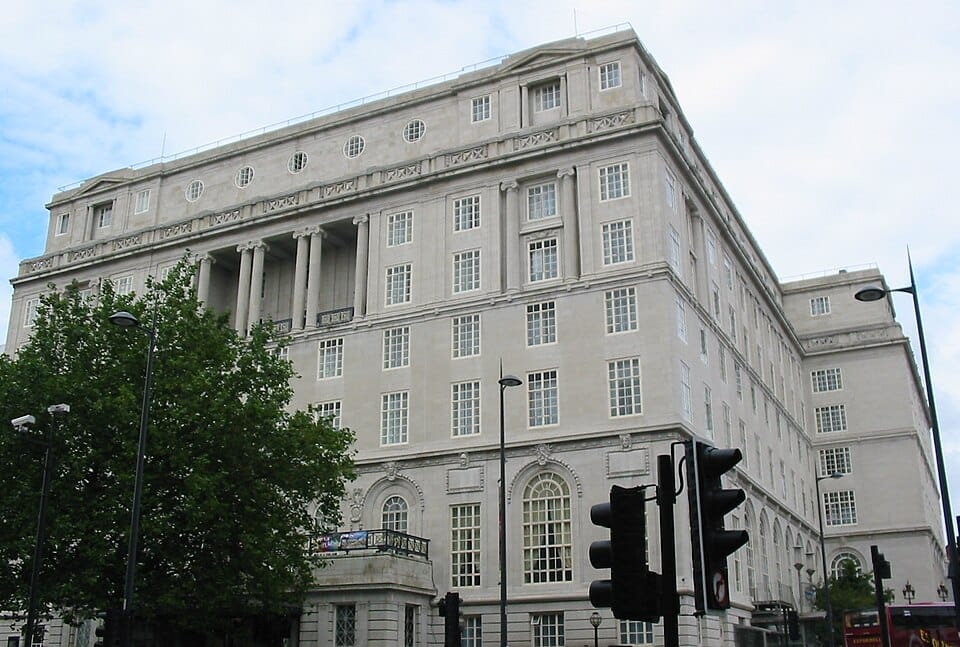
The Britannia Adelphi in Liverpool city centre is often called the most haunted hotel in the UK. Staff and guests report a pageboy who died in the lift, a grey lady in the basement and unsettling activity on the third floor.
Check prices