Charlotte
ReportedSeen: Upstairs and the bar area
A young woman said to have died after a clash with a highwayman. The manager reported seeing a woman's arm in 2005.
Inn or pub with rooms · You can stay here
56 Market Place, Pocklington
The Feathers on Pocklington's Market Place is probably the town's oldest inn, dating from at least Elizabethan times and rebuilt for the coaching trade in the 1820s. It has 16 en-suite rooms. Its ghost is Charlotte, a young woman said to have died after a clash with a highwayman, who in one version was hanged behind the inn. In 2005 the manager told the Pocklington Post he had seen a woman's arm in the bar area. No record of the murder or hanging has been found.
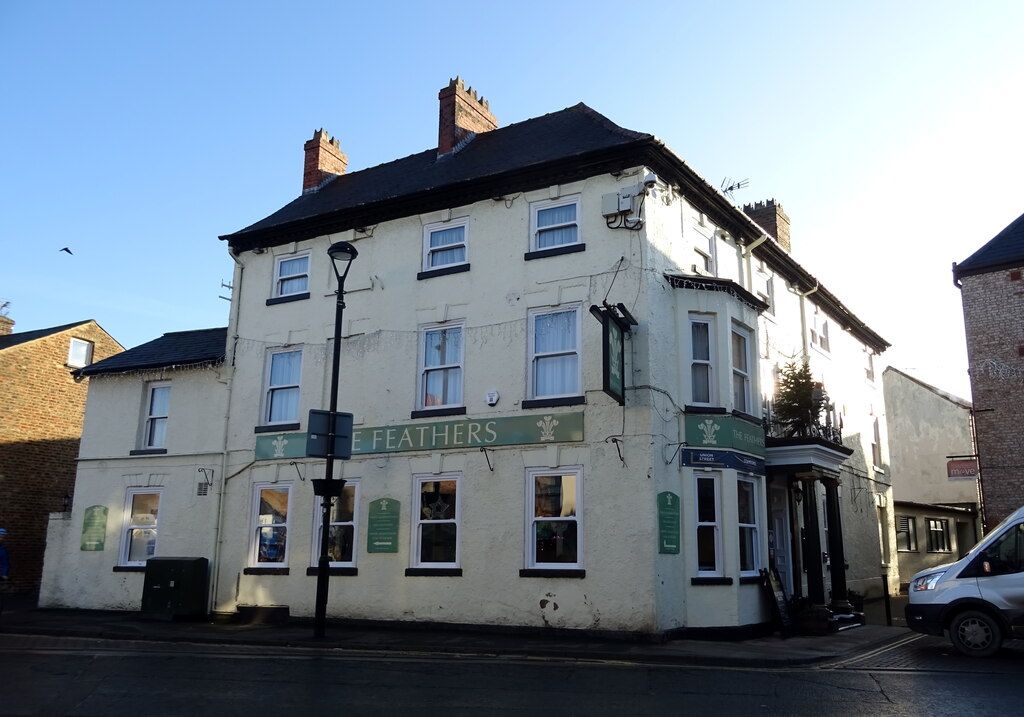
The inn's history is well recorded by Pocklington's local historians: a 1718 inventory, its long line of innkeepers, the canal meeting of 1814 and a rebuild in the 1820s.
The ghost rests on legend and one modern account. The story of Charlotte and the highwayman comes in at least two versions, and the local history site says no documentary evidence is given for either. In 2005 the manager, a self-described sceptic, told the Pocklington Post he saw a woman's arm, and a ghost-research team planned an overnight visit; we didn't find the results.
What we checked:Documented history × 5Published account × 2Legend × 2See each claim
Seen: Upstairs and the bar area
A young woman said to have died after a clash with a highwayman. The manager reported seeing a woman's arm in 2005.
Seen: The yard
A footpad said to have murdered a serving girl and been hanged in the inn's yard. No record found.
The Feathers' ghost is known as Charlotte, a young woman. In one version, told in the Pocklington Post in 2005, her husband or lover was a highwayman killed in the stables, now the car park, and she ran upstairs and killed herself. In another, the highwayman murdered her after she turned him down and was hanged at the back of the inn. The room where she is said to have died was later used as a store cupboard, because people didn't like spending time in it.
The Paranormal Database tells it as a footpad who murdered a serving girl at the inn and was hanged in its yard, and whose shade still lingers. It's likely the same legend told from the other side. No record of a murder or hanging at the inn has been found.
In March 2005 the manager, Graham Turvill, who called himself a sceptic, told the Pocklington Post he had been having his tea when he heard a plant rustle and saw a woman's arm. He thought a customer had passed out in the toilets, but found nobody there. "I saw it clear as day," he said. A team of ghost researchers from Sheffield planned an overnight investigation that month.
The Feathers still hosts ghost-hunt nights, most recently listed by Spirit Seekers in October 2025.
The Feathers is probably the oldest inn in Pocklington, dating from at least Elizabethan times. In the early 18th century it was called the Cut a Feather, and Bridget Smith's inventory of 1718 lists rooms named the Half Moon, Sun, Lyon, Crown, Marygold and Star Parlour. Some 16th-century oak rafters and moulded beams survive.
It was extensively rebuilt in the early 19th century to attract the coaching trade; Richard Keverne, writing about 1834, said it had been reconstructed "within the last ten years or so". It was a posting house with post-horses and large stables, and the town's market inn. On 25 August 1814 a meeting at the Feathers decided to build the Pocklington Canal. In 1834 the Lord Chancellor, Lord Brougham, complained about his reception when he stopped to change horses.
Francis Fallowfield kept the inn from at least 1786, and later landlords are recorded through the 19th century. Trust Houses Ltd ran it between the wars. In 1964 a motel extension opened under Jack and June Raynor. Today it's a hotel and bar with 16 en-suite rooms.
1718
Bridget Smith's inventory
25 August 1814
The canal is planned here
1820s
Rebuilt as a coaching inn
March 2005
The manager's sighting is reported
What each story about the Feathers Hotel rests on. A published account shows that someone reported an experience, not what caused it.
The Feathers dates from at least Elizabethan times, and some 16th-century beams survive.
The exact date of the first inn is unknown.
In 1718 the inn, then called the Cut a Feather, was kept by Bridget Smith, whose inventory names its rooms.
A meeting at the Feathers decided to build the Pocklington Canal.
The inn was extensively rebuilt in the early 19th century for the coaching trade.
Keverne (about 1834) says within the previous ten years or so.
A young woman called Charlotte died after a clash with a highwayman, who was killed in the stables or hanged behind the inn.
Told in different versions; no documentary evidence is given.
A footpad who murdered a serving girl was hanged in the inn's yard, and his shade lingers there.
Probably the Charlotte legend told another way. No record of a hanging found.
The manager, Graham Turvill, told the Pocklington Post he saw a woman's arm and found nobody there.
Read via the local history site's quotation of the article.
The room where Charlotte is said to have died was turned over to storage because people were scared to spend time in it.
Reported in 2005; we don't know which room or whether it's still a cupboard.
Ghost-hunt nights are held at the hotel.
The Feathers Hotel is said to be haunted by Charlotte and the hanged highwayman. Reported activity includes apparition, atmospheric.
Its ghost is Charlotte, a young woman linked to a highwayman. In 2005 the manager told the Pocklington Post he had seen a woman's arm in the bar area. The back-story has no record behind it.
No record of it has been found. The story is told in different ways, and the local history site says no documentary evidence is given.
It dates from at least Elizabethan times, with 16th-century beams, but was largely rebuilt in the 1820s.
Yes. It has 16 en-suite rooms. The room linked to Charlotte was later used as a store cupboard.
No guest accounts yet. If you've stayed here, yours could be the first.
Share your experiencePage last reviewed 21 November 2026.
Check room prices and availability for your dates.
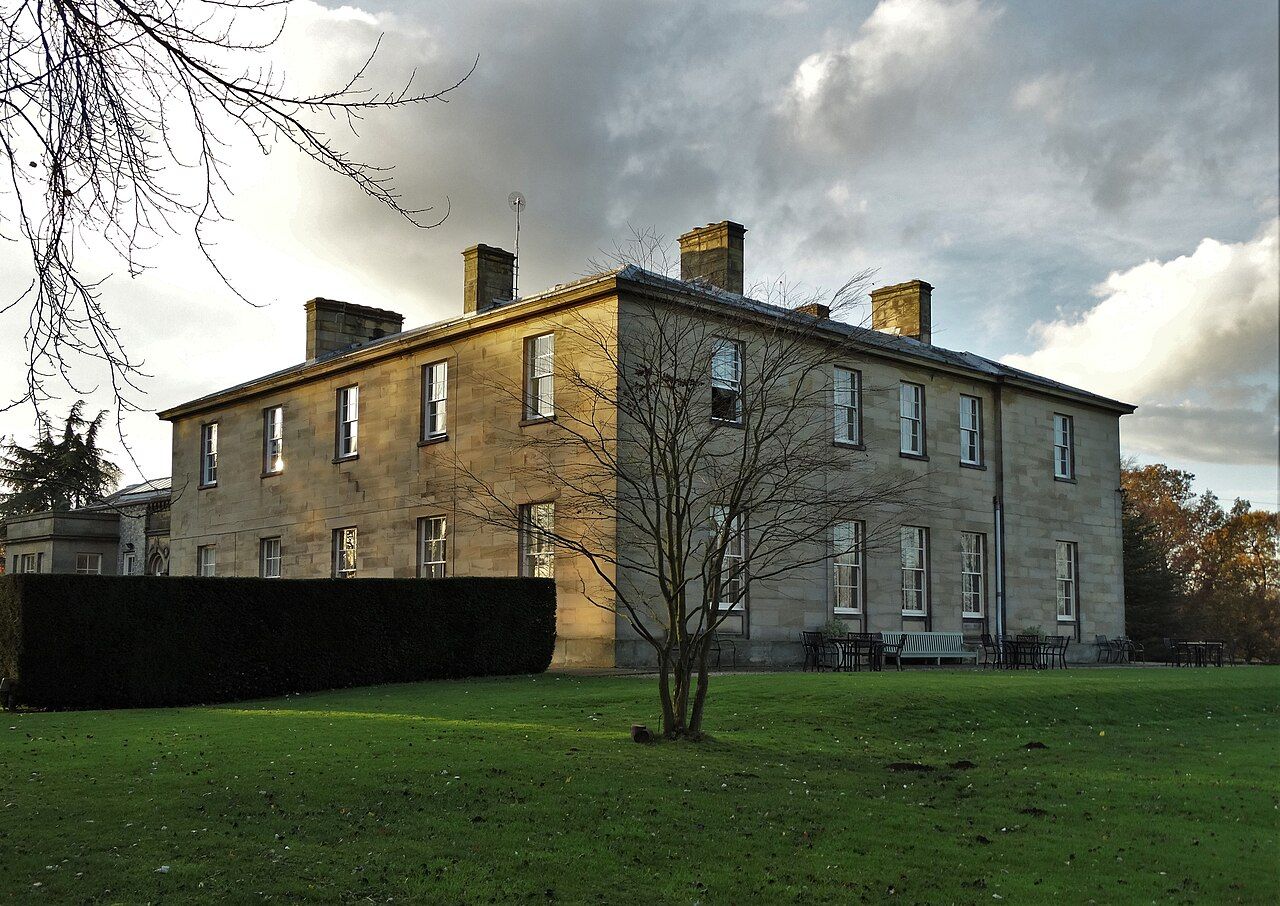
A Grade II* listed Regency country house on the north bank of the River Ouse near Howden, built in 1825 for the Saltmarshe family and now a wedding venue and boutique hotel. Most Haunted spent two episodes here in 2014.
Check prices