Sukie
LegendSeen: The inn, its gardens and the caves
An 18th-century servant girl said to have died after a cruel trick in the caves, seen in a white dress.
Inn or pub with rooms · You can stay here
High Street, West Wycombe
The George & Dragon is a Grade II listed coaching inn in the National Trust village of West Wycombe, Buckinghamshire, refronted about 1720 and now a pub with ten bedrooms. Its ghost is Sukie, an 18th-century servant said to have been lured to the caves by three village boys and to have died in her room at the inn; Buckinghamshire Live retold the story in 2021. Even Historic England's listing says the gardens are said to be haunted by a white lady. You can stay.
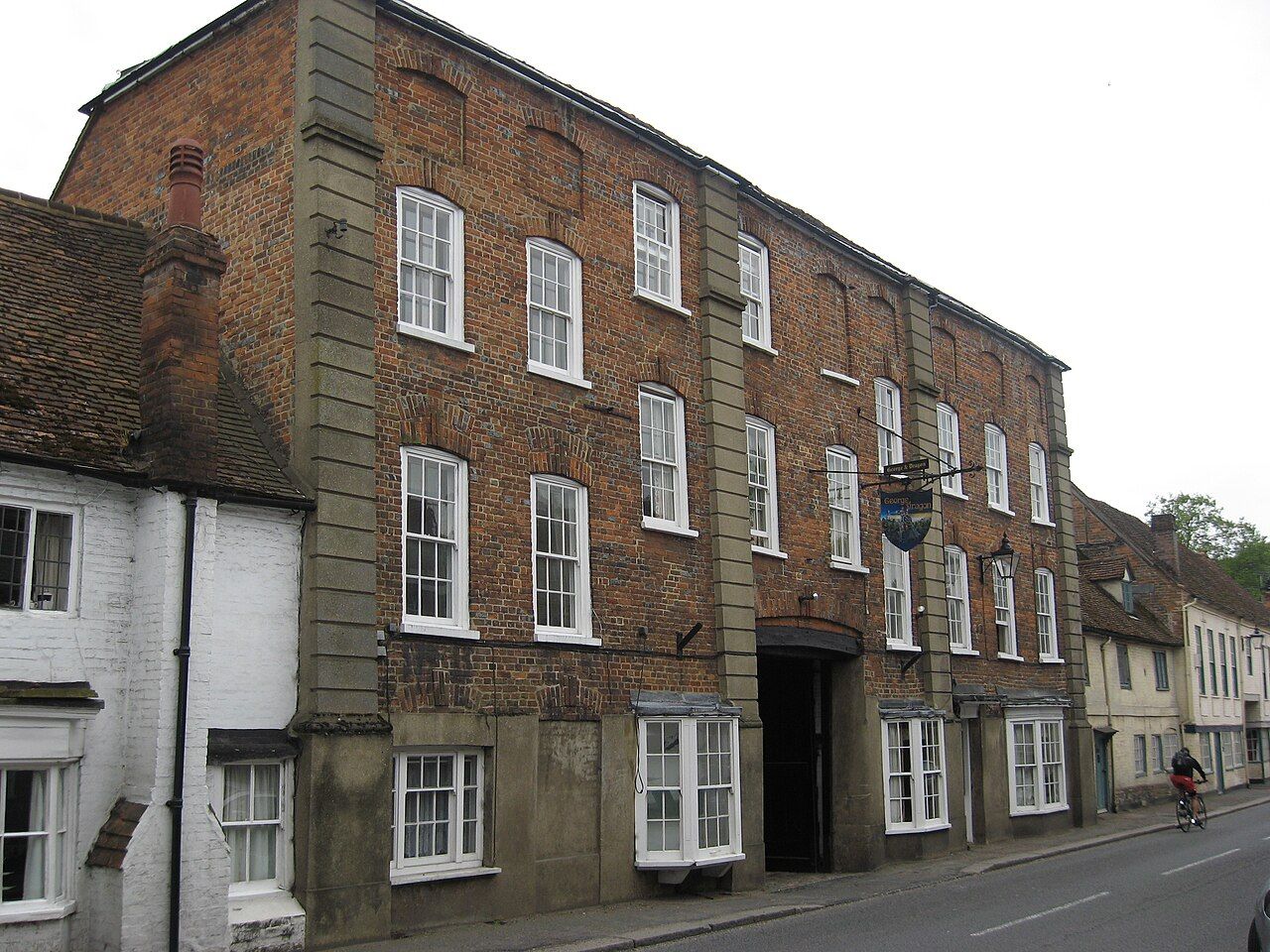
The inn's age is documented: Historic England lists it at Grade II as a refronting of about 1720 of an earlier timber-framed building, and the Hellfire Caves, where Sukie's story ends, were dug in 1748-52 for Sir Francis Dashwood. The listing itself notes that the gardens are said to be haunted by a white lady, which shows how old the reputation is, but not that anything was seen.
No record of Sukie has been found: no surname, date or burial goes with her, and the versions differ on whether she was a barmaid or a servant. The one named witness is an American guest, Jhan Robbins, who is said to have seen a point of light and felt an intense cold in 1966, but that comes from a single ghost website, and we haven't found his own account.
What we checked:Documented history × 6Published account × 1Legend × 3Unverified × 1See each claim
Seen: The inn, its gardens and the caves
An 18th-century servant girl said to have died after a cruel trick in the caves, seen in a white dress.
Seen: A guest bedroom
A pinpoint of light and an intense cold said to have been seen and felt by an American guest, Jhan Robbins, in 1966.
Seen: The main staircase
Heavy footsteps blamed on a traveller said to have been murdered at the inn. No name or record.
Sukie was a servant at the inn in the 18th century, the story goes, and turned down three village boys because she hoped to marry above her station. When a rich young man caught her eye, the boys forged a letter in his name asking her to meet him in the caves in a white dress, so they could elope. In the caves they jumped out at her and smashed her light; she ran, fell and struck her head. She was carried back to her room at the inn and died there. Two maids who shared her room are said to have seen her a few days later and refused to set foot in the inn again. Since then a girl in a white dress is said to be seen about the building, and the legend also places her ghost in the caves.
Historic England's list entry notes that the gardens are "said to be haunted by a 'white lady'". It's usually taken to be Sukie.
An American guest, Jhan Robbins, is said to have woken in 1966 to see a pinpoint of light about three feet off the floor near the door, then to have felt an intense cold and a sense of despair before he leapt back to bed and switched on the light. The account is on one ghost website.
Heavy footsteps are said to come down the main staircase, put down to a traveller murdered at the inn. He isn't named, and no record of a murder has been found.
Historic England, which listed the George and Dragon at Grade II in 1954, describes it as a "circa 1720 refronting of earlier structure": red brick with a stucco ground floor, and a timber-framed wing jettied over the yard. The county's heritage record puts the timber-framed inn in the 17th century or earlier. The hotel says it was built on the site of a 14th-century inn. It stood on the old London to Oxford road, and trade directories list its landlords and landladies through the 19th century.
West Wycombe belonged to the Dashwood family until 1929, when it was sold to the Royal Society of Arts, which gave it to the National Trust in 1934. The caves on the hill above were dug in 1748-52 for Sir Francis Dashwood, founder of the Hellfire Club.
The inn reopened after a refurbishment in March 2019 with ten bedrooms, a restaurant and a bar.
1720
The inn is refronted
1748
The caves are dug
1934
The National Trust takes over the village
9 January 1954
Listed, with its white lady
1966
The guest and the light
March 2019
Reopens after refurbishment
What each story about the George & Dragon Hotel rests on. A published account shows that someone reported an experience, not what caused it.
The inn is Grade II listed: a refronting of about 1720 of an earlier timber-framed building.
The inn was built on the site of a 14th-century inn.
The hotel's claim. The listing gives no date for the earlier building; the county record says 17th century or earlier.
The caves above the village were dug in 1748-52 for Sir Francis Dashwood.
Trade directories list the inn's licensees through the 19th century.
The village was sold by the Dashwoods in 1929 and given to the National Trust in 1934.
Historic England's list entry records that the gardens are said to be haunted by a white lady.
It records the story, not a sighting.
Sukie, a servant at the inn, was tricked by three village boys, fell in the caves and died in her room, and haunts the inn in a white dress.
No surname, date or record of the death has been found, and versions differ on whether she was a servant or a barmaid.
Two maids who shared Sukie's room saw her ghost and refused to enter the inn again.
Part of the legend; the maids aren't named.
An American guest, Jhan Robbins, saw a pinpoint of light by the door and felt an intense cold.
Only one ghost website gives the account; we haven't found Robbins's own.
Heavy footsteps on the main staircase belong to a traveller murdered at the inn.
No name, date or record of a murder.
The George & Dragon Hotel is said to be haunted by Sukie, the light by the door and the murdered traveller. Reported activity includes apparition, visual, auditory, temperature, footsteps.
It's known for the ghost of Sukie, a servant girl in a white dress, and even Historic England's listing notes that the gardens are said to be haunted by a white lady. No record of Sukie has been found.
In the legend, an 18th-century servant at the inn who was tricked by three village boys, fell in the caves and died in her room. No surname, date or record goes with her.
The stories don't say. Ask the inn when you book.
Historic England dates its front to about 1720, on an earlier timber-framed building.
No guest accounts yet. If you've stayed here, yours could be the first.
Share your experiencePage last reviewed 17 November 2026.
Check room prices and availability for your dates.
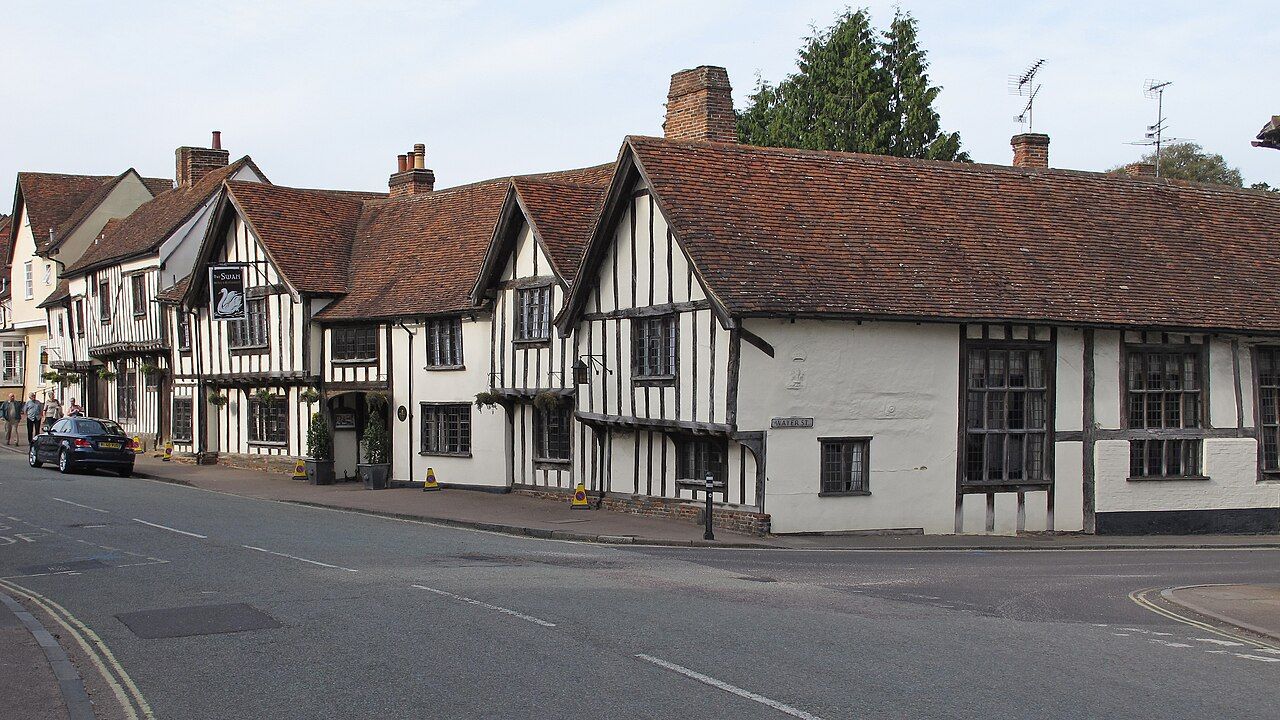
A cluster of medieval timber-framed houses in Lavenham, Suffolk, joined with a Grade I guild hall to make one hotel. American airmen signed the walls of its bar in the Second World War, and Room 15 has a ghost story.
Check prices
A 17th-century coaching inn on Stourbridge High Street, once the home of the ironmaster Richard Foley. Its legend is a Lady in White searching for her lost baby.
Check prices
An ordinary 1950s council house in Pontefract where, from 1966, the Pritchard family reported one of Britain's most famous poltergeist cases. It's now owned by a film producer and opened for overnight stays.
Check prices