The Lady in Red
ReportedSeen: The main staircase
A woman in a long red dress, said to fade away at the foot of the stairs. No named witness.
Hotel · You can stay here
St Nicholas Cliff, Scarborough
The Grand Hotel on St Nicholas Cliff, Scarborough, was built in 1863 to 1867 to Cuthbert Brodrick's design and is Grade II* listed. Its best-known ghost is a woman in a long red dress, reported by the Paranormal Database and a 2021 Greatest Hits Radio piece along with laughter, singing and moving objects. A later story says Anne Brontë, who died in a house on the site in 1849, haunts the ground floor. No account names a witness. It's a Britannia hotel, and you can book a room.
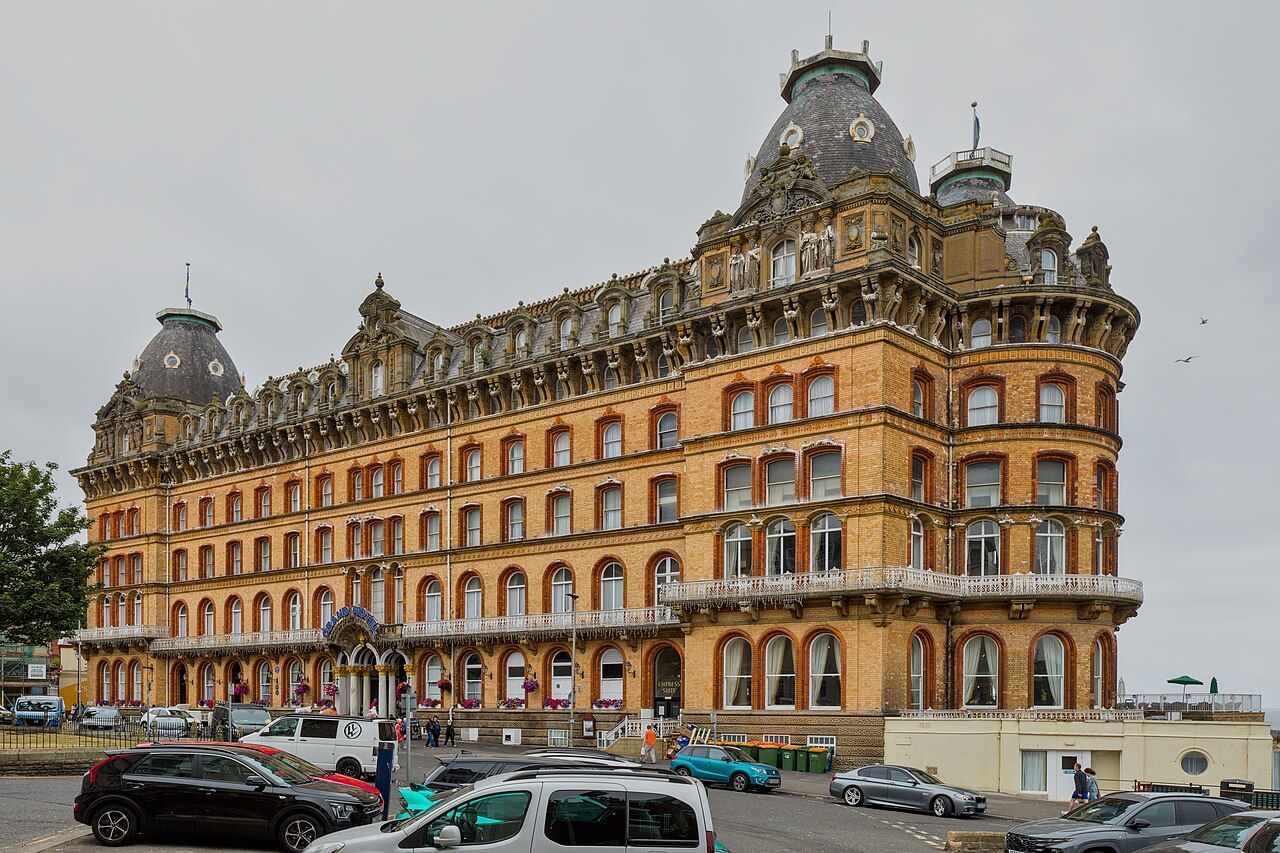
The history is solid. Historic England dates the hotel to 1863 to 1867 and names Cuthbert Brodrick as architect. A plaque on the building records that Anne Brontë died in a house on the site on 28 May 1849, and the hotel was badly damaged when German warships shelled the town in December 1914.
The ghosts are thin. The Lady in Red, the laughter and singing and the moving objects come from a ghost database and a radio listicle, with no names or dates. The Anne Brontë ghost is a legend: she died in a lodging house that was pulled down before the hotel was built. A story of a clergyman who died in his room in 1871 appears in one article, and we found no record of it.
What we checked:Documented history × 5Published account × 1Legend × 2Unverified × 1See each claim
Seen: The main staircase
A woman in a long red dress, said to fade away at the foot of the stairs. No named witness.
Seen: The ground floor
The writer died in a lodging house on the site in 1849, before the hotel was built. One ghost article says she is seen on the ground floor.
Seen: Bathroom mirrors
A man in old-fashioned clothes, linked by one article to a clergyman's death in 1871 that we couldn't find in any record.
The best-known story is of a woman in a long red dress. One ghost article says she is seen coming down the main staircase and fading away at the bottom step. No witness is named and no date is given.
The Paranormal Database and a 2021 Greatest Hits Radio article say guests have heard screaming, singing, laughter and old-fashioned music, seen objects fly across rooms and fall from walls, and heard knocking at doors with nobody outside.
Anne Brontë died in a house on this site in May 1849, eighteen years before the hotel opened. A 2025 Spooky Isles article says her ghost has been seen on the ground floor. The house she died in was demolished, and no witness is named.
The same article says a man in old-fashioned clothes is seen in bathroom mirrors, and links him to a clergyman it calls the Reverend T. Hall, who it says took his own life in his room in 1871. We found no record of this death.
The article also mentions stories of an extra passenger in the lift who vanishes between floors.
Before the hotel, the cliff top held a row of houses. In May 1849 Anne Brontë came to Scarborough with her sister Charlotte and their friend Ellen Nussey, hoping the sea air would help her. They took rooms at Wood's Lodgings, No. 2 The Cliff. She died there on 28 May 1849, aged 29, and is buried in St Mary's churchyard below the castle. A blue plaque on the hotel marks the spot.
The hotel was designed by the Hull architect Cuthbert Brodrick, who also designed Leeds Town Hall. It was built from 1863 to 1867 at a cost of over £100,000 and opened on 24 July 1867. It was one of the largest hotels in Europe. Its design is often said to follow the calendar: four turrets for the seasons, 12 floors for the months, 52 chimneys for the weeks and 365 bedrooms. Historic England listed it at Grade II* in 1973.
On 16 December 1914 German warships shelled Scarborough, and the hotel was hit many times.
Butlins bought the hotel in 1978. Britannia Hotels bought it in 2004 and still runs it.
28 May 1849
Anne Brontë dies on the site
1863
Building starts
24 July 1867
The hotel opens
16 December 1914
Shelled by German warships
November 2004
Britannia buys the hotel
What each story about the Grand Hotel rests on. A published account shows that someone reported an experience, not what caused it.
The hotel was built in 1863 to 1867 to the design of Cuthbert Brodrick, and is Grade II* listed.
Anne Brontë died on 28 May 1849 at Wood's Lodgings, a house on the site of the hotel.
The house was demolished; the hotel was built later.
The hotel opened on 24 July 1867.
Butlins bought the hotel in 1978, and Britannia Hotels in 2004.
A woman in a long red dress is seen, and guests hear laughter, singing and old-fashioned music, and see objects move.
Ghost sites and a radio listicle; no named witnesses or dates.
Anne Brontë's ghost is seen on the hotel's ground floor.
One ghost article, no witness. She died in a lodging house that stood on the site before the hotel was built.
A clergyman, the Reverend T. Hall, took his own life in his room at the hotel in 1871, and a man is seen in bathroom mirrors.
One ghost article with no references. We found no inquest or newspaper record.
The Grand Hotel is said to be haunted by the Lady in Red, Anne Brontë and the man in the mirror. Reported activity includes apparition, visual, objects moving, auditory, poltergeist.
Ghost sites and a radio article tell of a woman in a red dress, laughter and singing, and objects moving. None of the accounts names a witness or gives a date.
She died on 28 May 1849 at Wood's Lodgings, a house on the site. The hotel was built later, from 1863 to 1867, and a plaque on it marks where she died.
Cuthbert Brodrick, the architect of Leeds Town Hall. It opened in 1867.
Yes. It's run by Britannia Hotels, and some rooms look out over the South Bay.
No guest accounts yet. If you've stayed here, yours could be the first.
Share your experiencePage last reviewed 21 November 2026.
Check room prices and availability for your dates.
Make a night of it: join a guided ghost walk before you check in at the Grand Hotel.
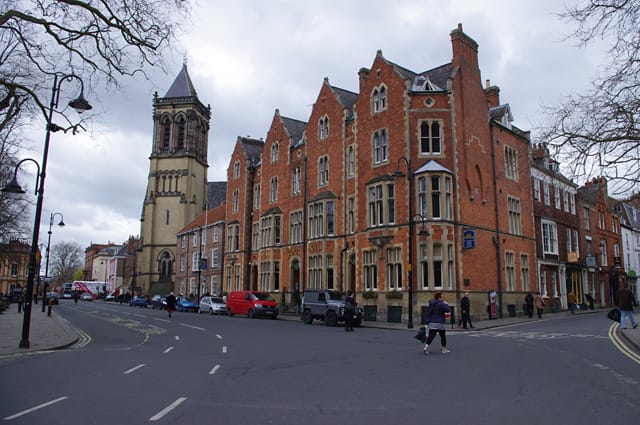
A Victorian hotel in the shadow of York Minster, built as homes for the Minster's clergy. Room 36, in the attic, is called one of the most haunted rooms in York: guests report pressure on their chests, slamming doors and, in one widely reported case, a man pulled out of bed by his feet.
Check prices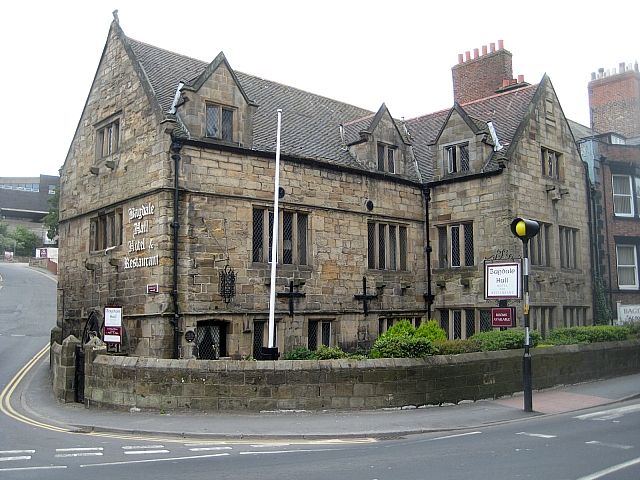
An early 16th-century hall in Whitby, now a hotel, once the home of the Civil War naval officer Browne Bushell, who was executed in 1651. His ghost is said to walk the stairs.
Check prices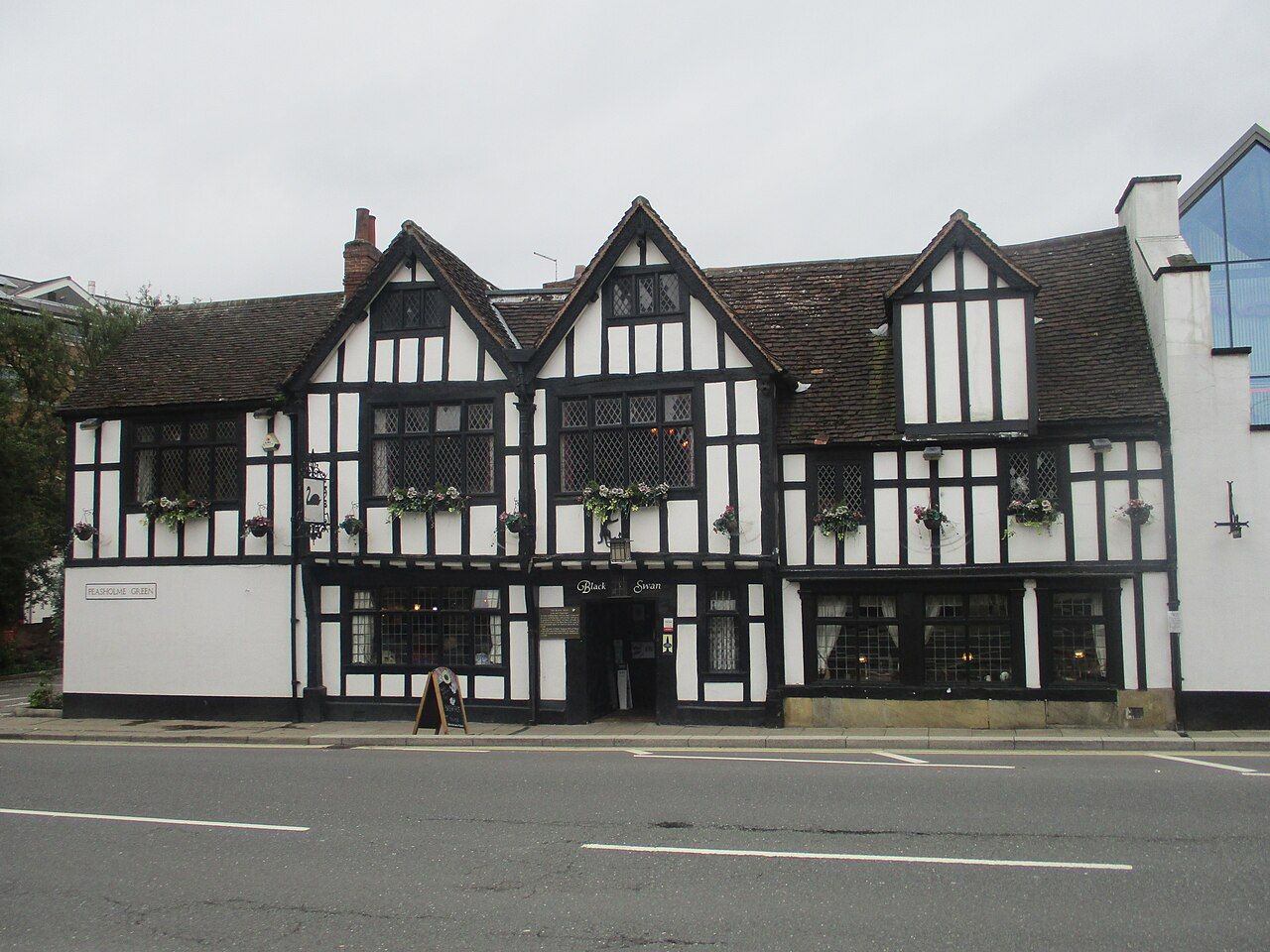
A timber-framed, Grade II* listed pub on Peasholme Green in York with three four-poster rooms upstairs. Its ghosts include a man in a bowler hat at the bar and a woman who stares at the fire.
Check prices