The crying child
ReportedSeen: The Tapestry Room
A child heard crying near the window, sometimes for half an hour, with a woman singing as if to comfort it. Reported by visitors and researchers, with no named witnesses.
Castle · Stays on set nights only
Muncaster Castle, Ravenglass
Muncaster Castle near Ravenglass is the Grade I listed home of the Pennington family, built round a medieval tower and remodelled by Anthony Salvin in 1862-66. It's linked to Tom Skelton, the jester known as Tom Fool. Its most famous ghost story is the Tapestry Room, where visitors report a child crying and footsteps; psychologist Jason Braithwaite has studied the room since 2004. You can't book a room in the castle, but small groups can stay overnight in the Tapestry Room on a ghost sit, and the estate has self-catering rooms.
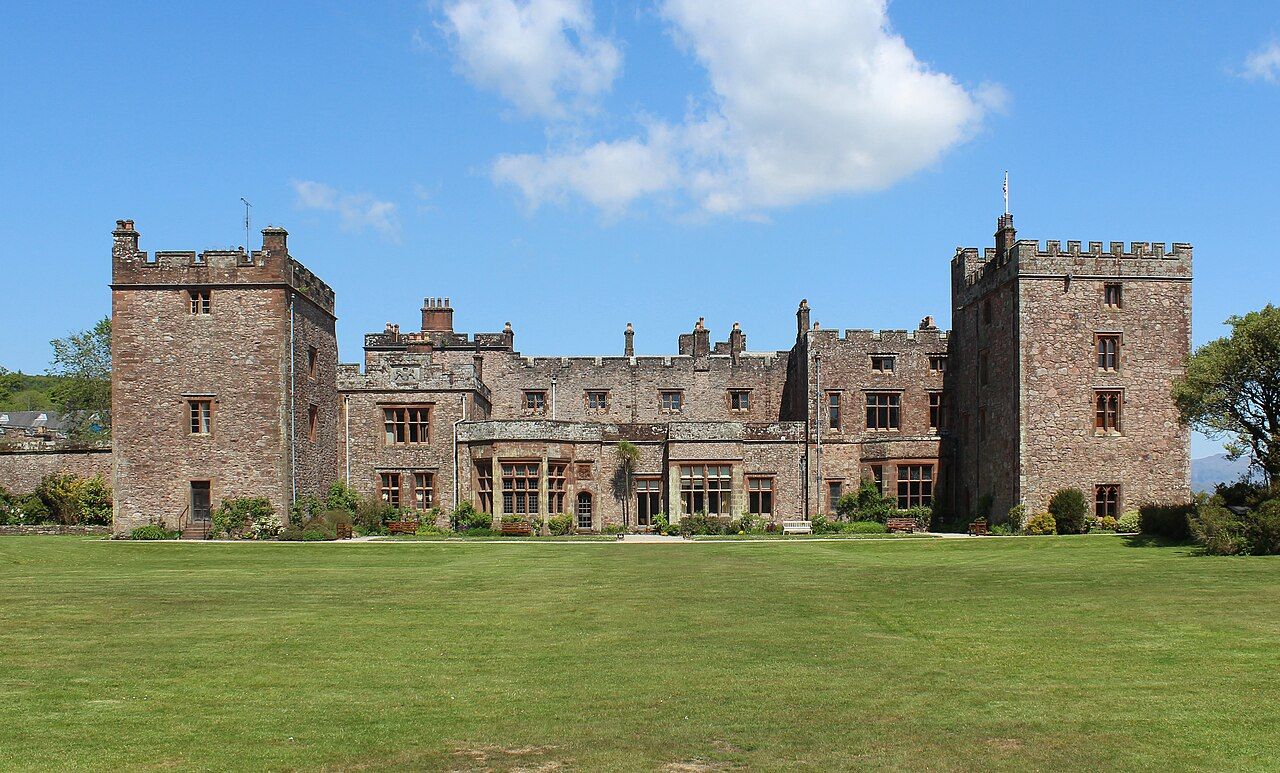
The castle's history is documented: Historic England lists it at Grade I, with a tower that may be 13th century and Salvin's 1860s rebuilding. Tom Skelton was real, but the castle places him in the mid-16th century while other evidence points to the 17th; the stories of murder and quicksand are legend.
The Tapestry Room is unusually well studied. The castle and researchers report a crying child, a singing woman and footsteps, often lasting up to an hour. Jason Braithwaite's measurements found unusual magnetic fields around the bed, caused by its iron mattress mesh, which he suggests may play a part. None of this shows what people experience, only what they report.
What we checked:Documented history × 4Published account × 2Legend × 3Disputed × 1See each claim
Seen: The Tapestry Room
A child heard crying near the window, sometimes for half an hour, with a woman singing as if to comfort it. Reported by visitors and researchers, with no named witnesses.
Seen: The castle
The jester Tom Skelton, said to play tricks on family, staff and visitors.
Seen: The gardens and the road near the Main Gate
Said to be a girl murdered near the Main Gate in the early 1800s. No record found.
The castle's best-known haunted room is the Tapestry Room, a small bedroom with Flemish hangings. The castle says visitors report disturbed nights, footsteps in the corridor, a door handle turning and the door opening with nobody there, and unexplained cold. A child is often heard crying near the window, and a woman is sometimes heard singing as if to a sick child. Researchers note the crying can go on for up to half an hour.
Tom Skelton, the castle's jester, is said to play tricks on family, staff and visitors, though he is rarely seen. Legend says he sent travellers he disliked across the estuary to the quicksand, and that he killed a carpenter who was courting Helwise Pennington, hiding the head under a pile of shavings. No record backs either story.
The Muncaster Boggle, or White Lady, is said to haunt the gardens and roads. The castle says she is Mary Bragg, a young girl murdered on the road near the Main Gate in the early 1800s. We found no record of the case.
In 2009 Hazel Muir, writing for New Scientist, spent a night in the Tapestry Room. She found it unsettling but reported nothing supernatural.
We haven’t confirmed this with the hotel yet.
Where visitors report a crying child, a singing woman and footsteps; bookable overnight as a ghost sit.
Ask when you book: nothing is guaranteed until the hotel agrees.
The Pennington family have lived at Muncaster for at least 800 years. Historic England's listing says the tower in the south-west corner may date from the 13th century. Tradition says Sir John Pennington sheltered Henry VI here after the Battle of Hexham in 1464, and that the King gave him a glass bowl, the Luck of Muncaster.
Between 1862 and 1866 Anthony Salvin remodelled and enlarged the house for the 4th Lord Muncaster, giving it much of its present look. It was listed at Grade I in 1967.
A portrait of Tom Skelton in motley hangs in the castle, and the castle says its archives record the purchase of his costume. The castle places him in the mid-16th century, but a Wigan local history study says he moved to Haigh Hall in 1659 and links him to a burial at Wigan in 1668.
Peter and Iona Frost-Pennington have owned the castle since 2021. It is open to visitors, with gardens and a hawk and owl centre, and the estate lets self-catering rooms in the old stable yard.
1464
Henry VI at Muncaster (tradition)
13 January 1668
Tom Skelton buried at Wigan?
1862
Salvin remodels the castle
31 March 2004
Magnetic study of the Tapestry Room
2009
A journalist's night in the Tapestry Room
What each story about Muncaster Castle rests on. A published account shows that someone reported an experience, not what caused it.
Muncaster Castle is Grade I listed, with a tower that may be 13th century, remodelled by Anthony Salvin for the 4th Lord Muncaster.
The listing puts a question mark against the 13th-century date.
Sir John Pennington sheltered Henry VI after the Battle of Hexham, and the King gave him a glass bowl, the Luck of Muncaster.
Wikipedia calls it tradition.
Tom Skelton was the castle's jester in the mid-16th century.
The castle's date. Wikipedia and Wigan local history place him in the 17th century.
A Thomas Scelton of Haigh was buried at Wigan in January 1668, possibly the jester.
The burial is in the parish register; that it is the jester is an inference.
Tom Skelton killed a carpenter courting Helwise Pennington and sent travellers he disliked to the quicksand.
No record backs either story.
Visitors to the Tapestry Room report a child crying, a woman singing, footsteps and a door opening by itself.
No named witnesses; researchers say the crying can last up to half an hour.
Jason Braithwaite measured unusual magnetic fields round the Tapestry Room bed, caused by the iron mesh under the mattress.
Early results; he suggests the fields may contribute to people's experiences, not that they explain them.
New Scientist's Hazel Muir spent a night in the Tapestry Room and reported nothing supernatural.
The White Lady is Mary Bragg, a girl murdered on the road near the Main Gate in the early 1800s.
No record of the case found.
We haven't confirmed it with the hotel yet. Ask when you book: nothing is guaranteed until the hotel agrees.
The most reported areas are: The Tapestry Room.
It has one of England's best-studied haunted rooms. Visitors to the Tapestry Room report a crying child and footsteps, and psychologist Jason Braithwaite found unusual magnetic fields round its bed. That shows what people report, not what causes it.
Not as a hotel guest. Groups of up to eight can book an overnight ghost sit in the Tapestry Room, and the estate has self-catering rooms in the Coachman's Quarters and holiday homes in Ravenglass.
Tom Skelton, a jester to the Pennington family whose portrait hangs in the castle. The castle places him in the 16th century, other evidence in the 17th. The murder and quicksand stories are legend.
The castle lists £500 per group of up to eight, over-17s only, including a private tour and breakfast. It says prices may change, so check when you book.
No guest accounts yet. If you've stayed here, yours could be the first.
Share your experiencePage last reviewed 17 November 2026.
Check room prices and availability for your dates.
Want more castles? See all our haunted castle hotels.

An ordinary 1950s council house in Pontefract where, from 1966, the Pritchard family reported one of Britain's most famous poltergeist cases. It's now owned by a film producer and opened for overnight stays.
Check prices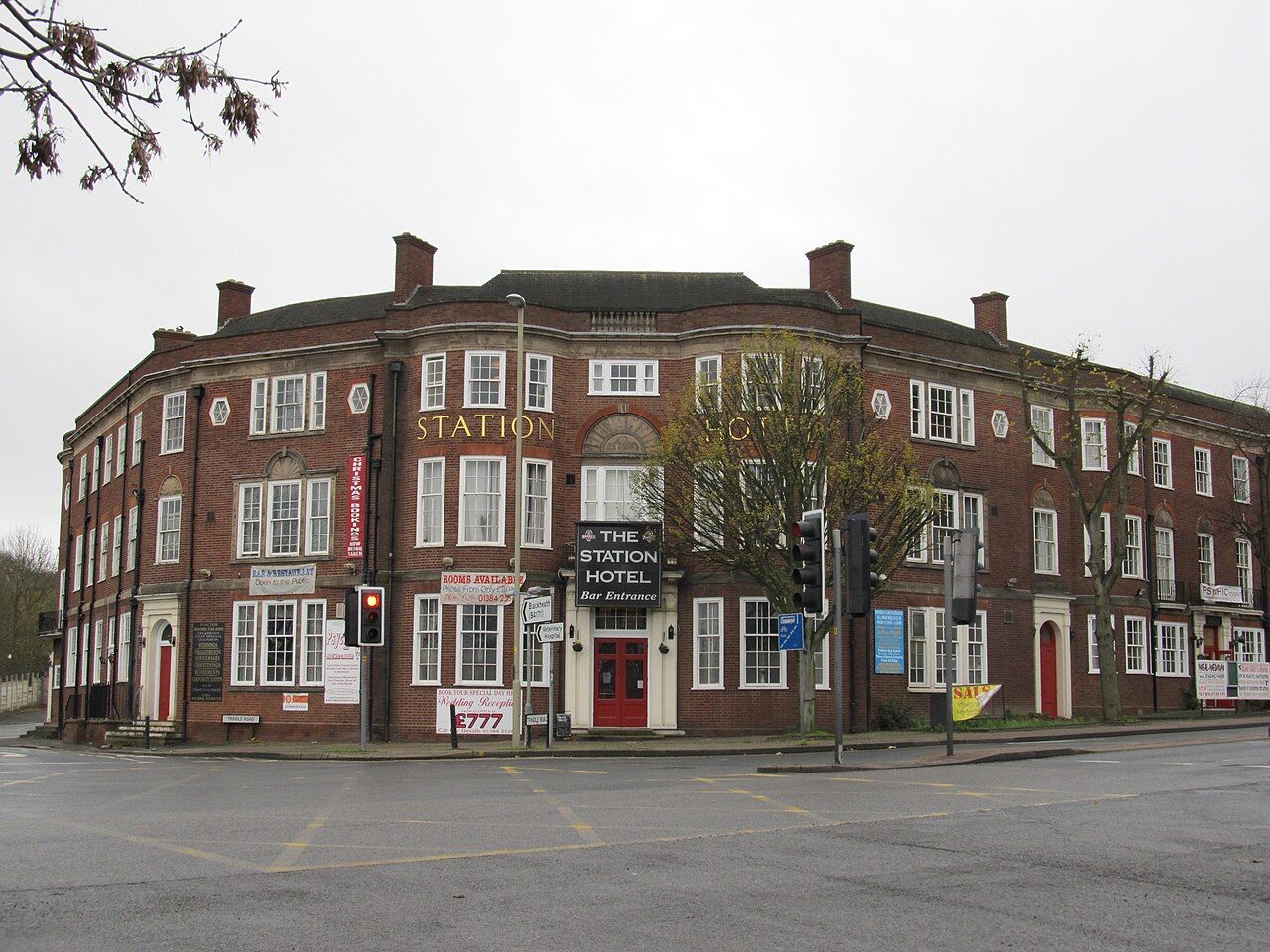
A 1930s hotel on Castle Hill in Dudley, now The Station ApartHotel, where Laurel and Hardy stayed and Most Haunted filmed a chair moving in Room 214. Its ghost legend is a murder in the cellar.
Check prices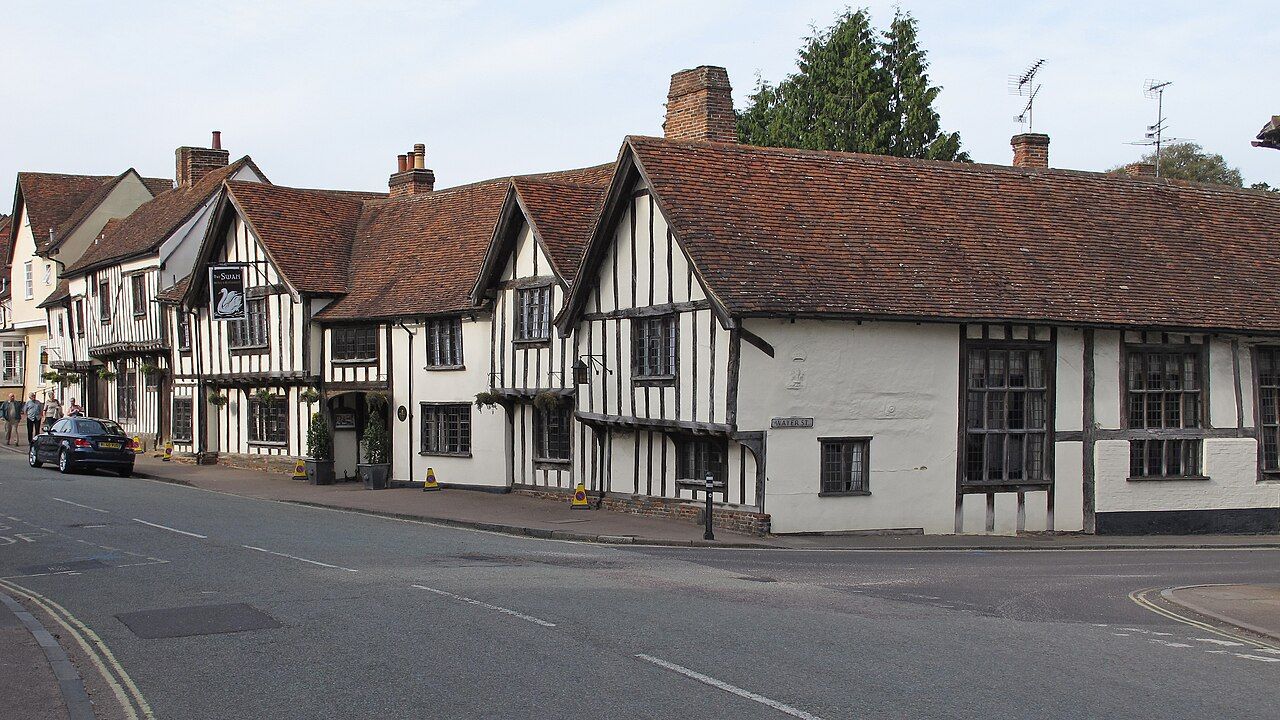
A cluster of medieval timber-framed houses in Lavenham, Suffolk, joined with a Grade I guild hall to make one hotel. American airmen signed the walls of its bar in the Second World War, and Room 15 has a ghost story.
Check prices