Juliet Tewsley
LegendSeen: The stone slab in the bar and the riverbank
A girl said to have hanged herself for love in 1050 and to rise every 17 March. Her name, her lover's and the date came from a Ouija séance in 1953.
Inn or pub with rooms · You can stay here
Holywell, St Ives
The Old Ferry Boat Inn at Holywell, near St Ives, is a Grade II listed 17th-century thatched inn on the River Great Ouse, now run by Greene King Inns with seven bedrooms. A slab in the bar floor is said to be the grave of Juliet Tewsley, who hanged herself for love in 1050 and rises every 17 March. The psychical researcher Tony Cornell later wrote that her name came from a Ouija séance he held at the inn in 1953. A former duty manager told Cambridgeshire Live of lights and menus behaving oddly. You can stay.
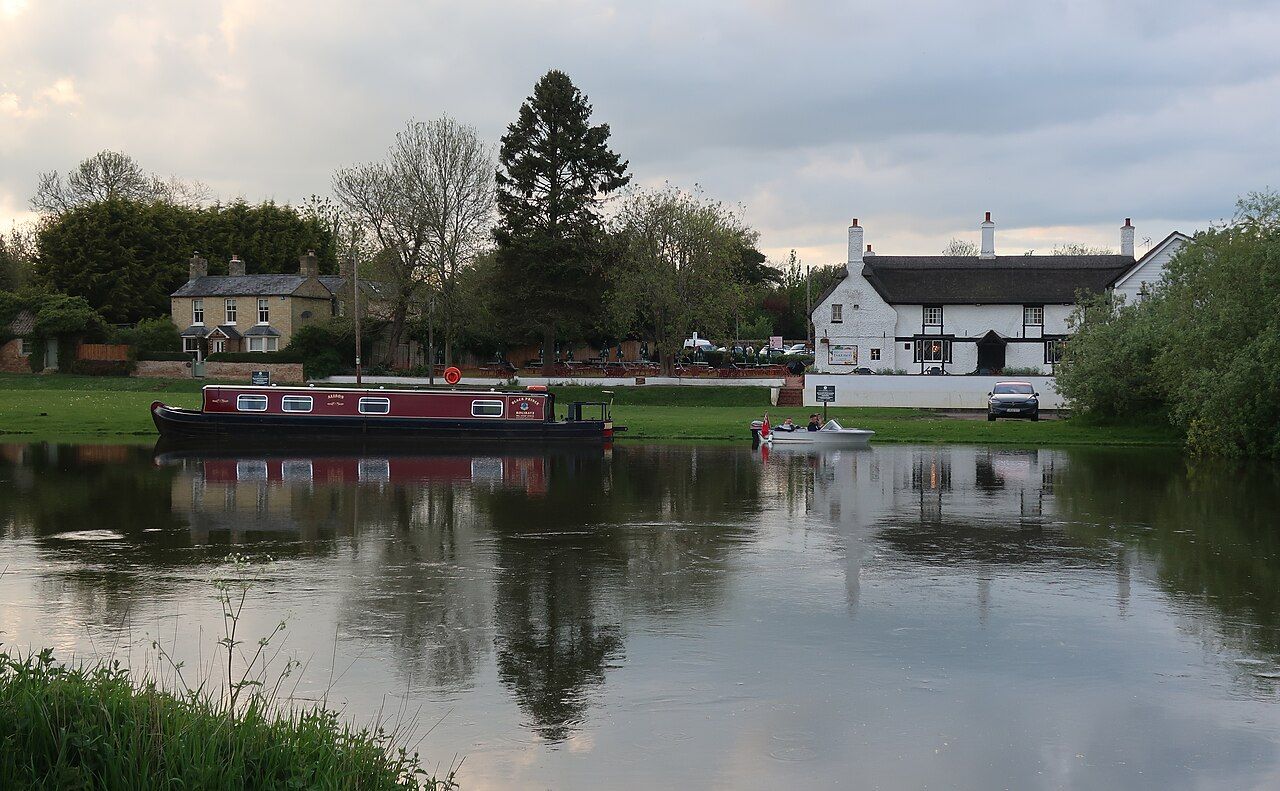
The building is documented: it's listed at Grade II as a 17th-century inn with an earlier cross-wing, and census returns show publicans and a ferryman here in the 1800s. The claim that it was founded in AD 560 and is England's oldest pub isn't supported by the listing.
The ghost story is weaker than it looks. Tony Cornell, who held séances at the inn in 1953 and 1954, wrote that the names Juliet Tewsley and Tom Zoul, and the date of 1050, came from his group's Ouija board, and that he found no one who had heard the Juliet story before 1953. An older version, recorded by Joan Forman, has only a lady in white who points at a flagstone. Peter Underwood called it a ghost "which everyone knows about but few have seen". The most recent accounts are of lights, noises and menus on the floor, from a named former duty manager.
What we checked:Documented history × 2Published account × 4Legend × 2Disputed × 1See each claim
Seen: The stone slab in the bar and the riverbank
A girl said to have hanged herself for love in 1050 and to rise every 17 March. Her name, her lover's and the date came from a Ouija séance in 1953.
Seen: The bar
The older, nameless version: a lady in white who points at a flagstone, said locally to hide treasure.
Seen: The bar and restaurant
A former duty manager described lights that won't go off until you say goodnight to Juliet, and menus found on the floor.
The story says that Juliet, a local girl, loved a woodcutter or forester called Tom Zoul, who didn't love her back. She hanged herself from a tree by the river, on 17 March 1050 in most versions; in another she drowned in the Ouse. As a suicide she was buried by the river under a plain stone slab, and when the inn was extended the slab ended up inside. It can still be seen in the floor near the dining tables. Every 17 March her ghost is said to rise from the river and glide towards the stone.
In 1953 the psychical researcher Tony Cornell and three friends went to the inn on 17 March, having heard that a lady in white appeared there on that date. They set up a Ouija board in the bar, and the board spelled out a woman called Juliet, hanged in 1050 for love of a man called Thomas. A second séance at their hotel added the surname Tewslie and Thomas's surname, Zoul. In 1954 the landlord asked for another séance, the press got hold of it, and the pub was full of reporters on the night. The board now spelled the surname Tewsley. Juliet said she would try to appear. Nothing happened. Cornell later wrote that he couldn't find anyone who had heard the Juliet story before 1953, and the local vicar said there was no evidence either person existed.
An older version, told to the writer Joan Forman by a local man who remembered his grandparents speaking of it, has no names at all: a lady in white comes in and points at a flagstone in the bar, which locals took to mean treasure was hidden under it.
The ghost hunter Peter Underwood visited in 1965. The landlord told him "There are certainly some very odd happenings here", and that local women stayed away on 17 March. Underwood called it a ghost "which everyone knows about but few have seen".
Jamie Toms, a former team leader and duty manager who lived above the pub, told Cambridgeshire Live in 2019 that the lights sometimes won't go off until you say "goodnight Juliet", that menus appear on the floor, and that he heard bangs and doors opening when alone. He said he had never seen an apparition. He said the week before 17 March was worse, with lights pulsing, and that guests who slept badly were asked whether they had walked over the grave.
The inn stands at an old crossing of the River Great Ouse between St Ives and Over, served by a ferry until the 1930s or 1940s. The Ferry Boat was once two dwellings, an inn called the Boat facing the river and Ferry Cottage facing west. A local history says the inn contains bog oak from the 14th or 15th century.
Historic England listed it at Grade II in 1982 as a 17th-century inn with an earlier cross-wing: timber-framed, with thatched roofs, a large inglenook hearth with a baking oven, and an enclosed staircase.
The inn and Greene King say it dates from AD 560 and is widely believed to be England's oldest pub. No record behind that date has been published, and the listing describes a 17th-century building.
Census returns show the Metcalf family here in 1841 and 1851, with Alice Metcalf a widowed publican. William Jackson, a brick-maker who married her daughter, was the publican in 1881 and 1891, when the household included a ferryman. The inn was flooded in 1947 and 1959.
It's now run by Greene King Inns, with a restaurant, a large garden by the river and seven en-suite bedrooms.
1841
Metcalf family at the inn
17 March 1953
Séance names Juliet
17 March 1954
Séance before the press
1965
Peter Underwood visits
4 November 1982
Listed at Grade II
2019
Duty manager's account
What each story about the Old Ferry Boat Inn rests on. A published account shows that someone reported an experience, not what caused it.
The inn is Grade II listed as a 17th-century inn with an earlier cross-wing.
The inn was established in AD 560 and is England's oldest pub.
The operator's claim, with no published record behind it. The listing describes a 17th-century building with an earlier cross-wing.
Census returns record the Metcalf and Jackson families as publicans here from 1841, with a ferryman in the household in 1881.
Juliet Tewsley hanged herself for love of Tom Zoul on 17 March 1050, was buried under the slab now in the inn's floor, and rises every year on that date.
No record of either person. The names and the date came from a Ouija séance in 1953.
An older version of the story has a nameless lady in white who points at a flagstone in the bar.
Recorded by Joan Forman from a local man's memory of his grandparents; known here only at second hand.
Tony Cornell's group held a Ouija séance at the inn that produced the names Juliet and Thomas Zoul and the date 1050; he found no one who knew the story before then.
Cornell's own account, published in 1995 and read here in a detailed summary.
A second séance, at the landlord's request, drew the press; Juliet promised to appear but nothing happened.
The landlord told Peter Underwood of odd happenings and said local women stayed away on 17 March.
The landlord isn't named. Underwood called it a ghost that few have seen.
A former duty manager, Jamie Toms, said lights wouldn't go off until he said goodnight to Juliet, menus appeared on the floor and he heard bangs and doors when alone.
He said he had never seen an apparition.
It's known for Juliet Tewsley, said to rise from her grave slab every 17 March. No one is named as having seen her, and her name came from a 1953 séance. Staff have described lights and noises they can't explain.
There's no record of her. Tony Cornell, who held séances at the inn in 1953 and 1954, wrote that her name, Tom Zoul's and the date of 1050 came from his group's Ouija board.
The inn claims AD 560, but Historic England lists it as a 17th-century inn with an earlier cross-wing. The early date has no published record behind it.
Yes. Greene King Inns runs it with seven en-suite bedrooms, some dog friendly.
No guest accounts yet. If you've stayed here, yours could be the first.
Share your experiencePage last reviewed 24 November 2026.
Check room prices and availability for your dates.

A 17th-century coaching inn on Stourbridge High Street, once the home of the ironmaster Richard Foley. Its legend is a Lady in White searching for her lost baby.
Check prices
An ordinary 1950s council house in Pontefract where, from 1966, the Pritchard family reported one of Britain's most famous poltergeist cases. It's now owned by a film producer and opened for overnight stays.
Check prices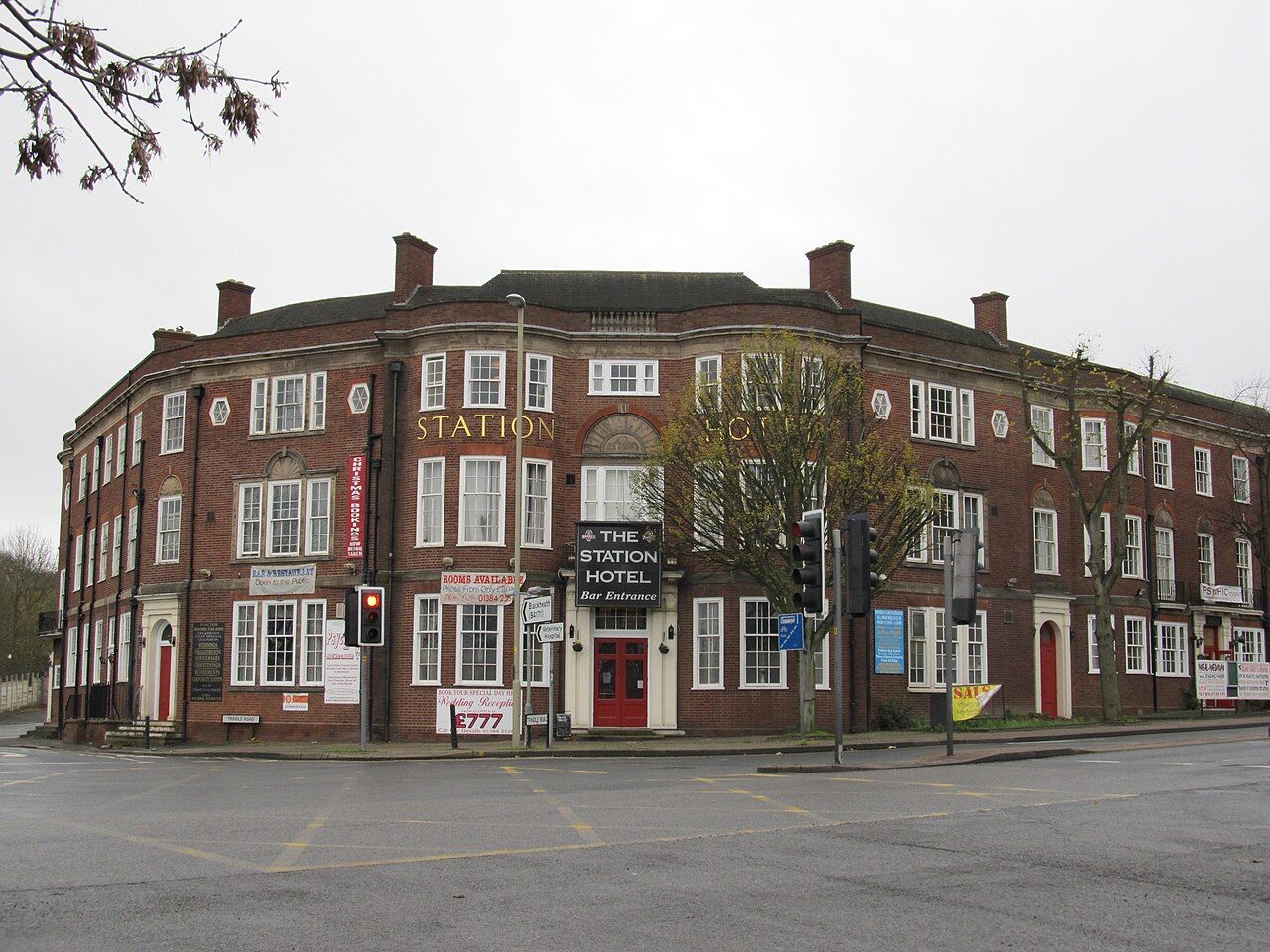
A 1930s hotel on Castle Hill in Dudley, now The Station ApartHotel, where Laurel and Hardy stayed and Most Haunted filmed a chair moving in Room 214. Its ghost legend is a murder in the cellar.
Check prices